

Recent Posts
.png)
.png)
Project: Localising Data Science for Climate Change Adaptation in Uttarkashi District, Uttarakhand
Project Title: Localising Data Science for Climate Change Adaptation in Uttarkashi District, Uttarakhand
Implementing Agency: Appropriate Technology India (AT India)
Supported By: United Nations Development Programme (UNDP) & Bill & Melinda Gates Foundation(BMGF)
Project Duration: October 2024 – February 2027
Reporting Period: October 2024 – March 2025
Executive Summary:
This report outlines the initial six months of implementation of the project "Localising Data Science for Climate Change Adaptation" in Uttarkashi district, which is part of the Western Himalayan Agro-Climatic Zone. The initiative, supported by UNDP India and BMGF, implemented by Appropriate Technology India (AT India), is designed to promote evidence-based, community-driven climate adaptation through localized interventions.
From October 2024 to March 2025, the project focused on groundwork and preparation, laying a strong foundation for full-scale implementation from FY 2024–25 onwards. Two Gram Panchayats, Gawana and Astal, were finalized as implementation sites, covering three villages (Gawana, Astal, and Devli). Key milestones achieved include institutional setup, extensive community mobilization, completion of the baseline assessment, design of a detailed action plan, and the initiation of convergence-based models for climate resilience.
A highlight of the progress was the strong response from the local community, including women and youth, and the proactive support from line departments, which collectively indicate high readiness for scaling climate-smart solutions.
Project Background:
Climate change presents one of the most significant risks to the lives and livelihoods of rural communities in fragile ecosystems such as the Western Himalayas. Uttarkashi, characterized by steep terrain, erratic weather patterns, and ecological fragility, faces increasing stress on its agricultural systems, water sources, and forest-based livelihoods.
The UNDP-supported initiative aims to localize climate action through data-driven planning and community-based strategies. The project recognizes that while national-level frameworks are important, adaptation must be rooted in local contexts, drawing from both scientific research and indigenous knowledge systems. The project thus seeks to bridge the gap between macro-level climate data and micro-level decision-making by empowering Gram Panchayats and local institutions.

Objectives of the Project:
The core objective of the project is to enhance climate resilience in vulnerable communities through an integrated model of Climate Smart Villages (CSVs). This will be achieved by:
- Promoting sustainable agriculture and climate-resilient practices.
- Introducing infrastructure and technology for resource efficiency.
- Building institutional capacities for data-informed planning.
- Facilitating convergence of government schemes and private resources.
- Empowering communities, particularly women, SC/ST households, and youth, to adopt resilient livelihoods.
Project Sites and Community Profiles:
Two Gram Panchayats—Gawana and Astal—in Dunda Block of Uttarkashi were selected after consultation with the district administration and technical validation based on criteria such as climate vulnerability, resource dependency, socio-economic indicators, and potential for convergence. The project covers the following villages:
- Gawana
- Astal
- Devli
These communities primarily depend on subsistence agriculture and wage labor. Women play a crucial role in household-level farming but often lack formal recognition or access to services.

Institutional Setup and Stakeholder Engagement:
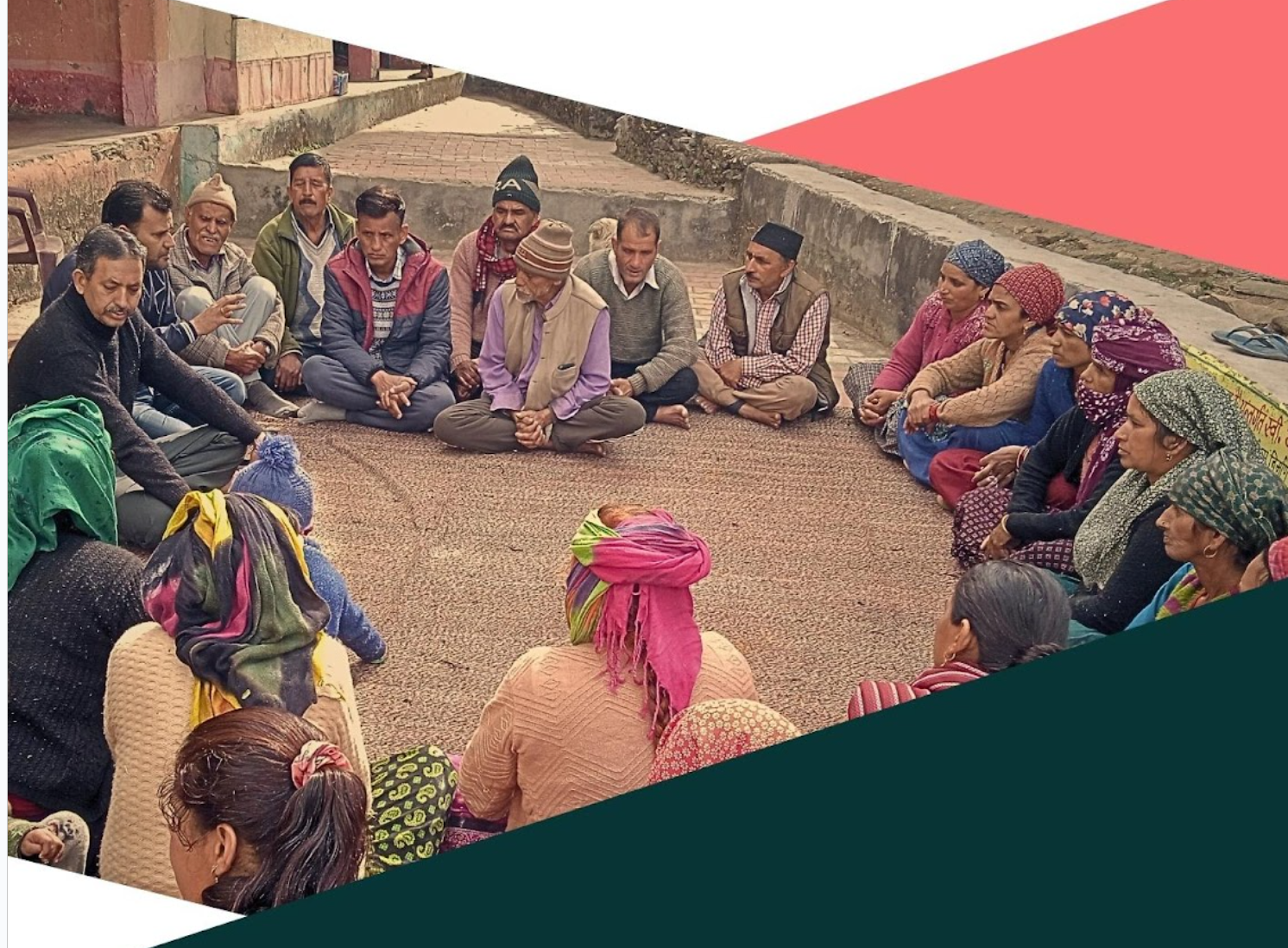
A strong focus during this phase was placed on building local institutional mechanisms and securing stakeholder ownership. A District working group formation in under process with representation from key departments—Agriculture, Horticulture, Animal Husbandry, Minor Irrigation, Disaster Management, and KVK. At the grassroots level till reporting period 12 producer groups have been formed in both gram panchayats Gawana and Astal, to facilitate economic activities, skill building, and information dissemination and now operational and have begun meeting regularly to coordinate planning and facilitate convergence.

0 Comments
Leave a Comment
Your email address will not be published. Required fields are marked *